Providing a cutting-edge digital solutions to drive an engagement and accelerate online growth.
Client Name:
Weaverbird Innovations Pvt. Ltd.Industry Name:
3D StudioProject Duration:
2 Years+Location:
IndiaServices Offered:
SEO, PPC
Category:
Resultron provided expert SEO and PPC services to Weaverbird Innovations Pvt. Ltd. to help them growing business scale their online visibility and drive measurable revenue. Through targeted on-page and off-page SEO strategies, Resultron steadily improved organic traffic, ensuring the brand ranked higher on Google search results. Simultaneously, precisely crafted Google Search Ads campaigns were launched to capture high-intent buyers, resulting in a significant boost in PPC-driven sales. Every ad was optimized for maximum click-through rates, quality scores, and conversion performance — ensuring every rupee spent delivered real returns. Resultron’s integrated digital approach transformed online presence into consistent, scalable business growth and increased revenue.
Results:
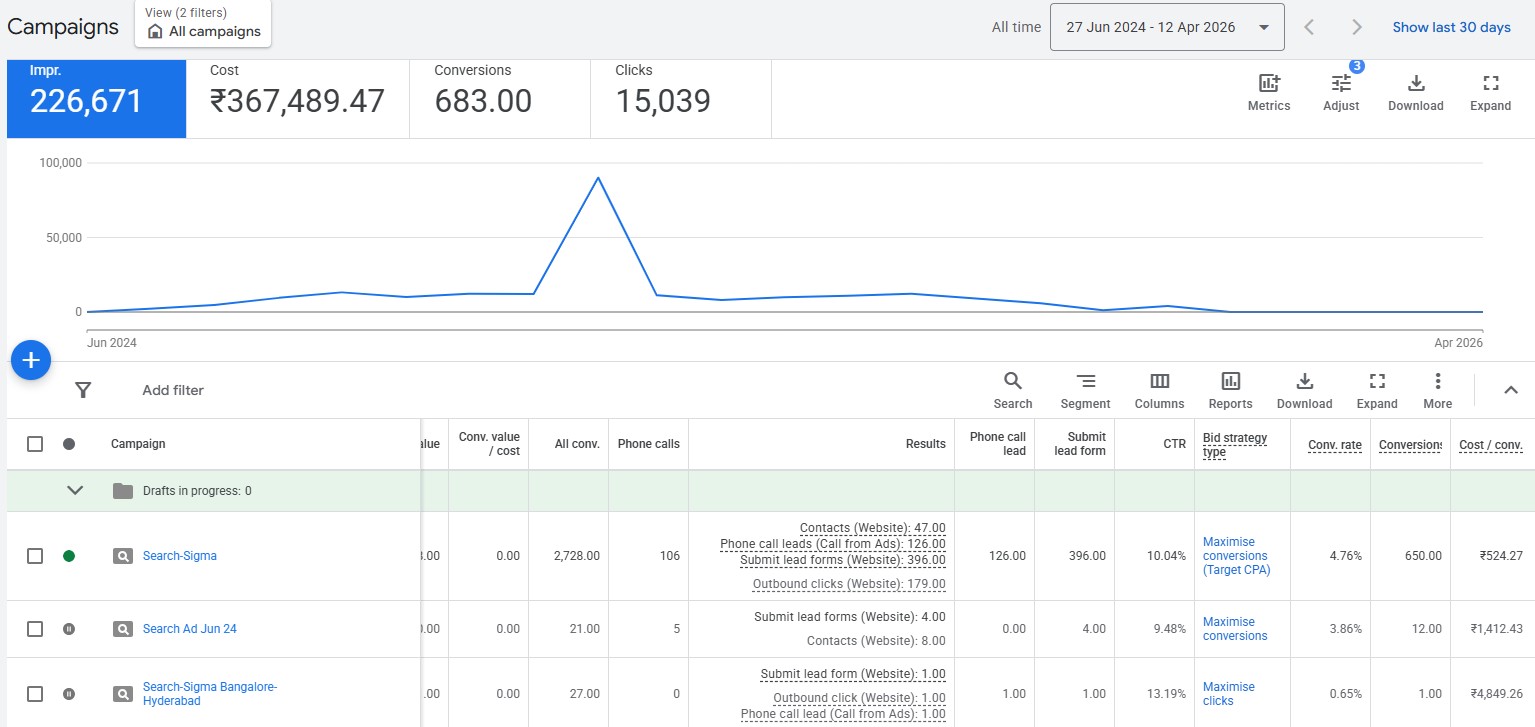
- We spent 3.67L in last 1 Year and got 683 Leads from Google Ads at CPL of 537
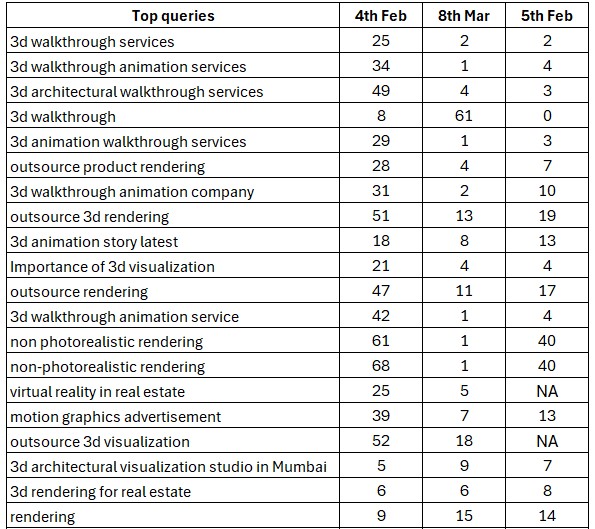
We improve their organic traffic by 200%+ withing a span of year.


Real estate projects don’t forgive inefficiency. Every design discrepancy caught late, every clash discovered on-site, and every rework cycle compounds cost, delays handover, and erodes stakeholder confidence. Weaverbird delivers end-to-end BIM services built specifically for real estate—helping developers, architects, and construction teams move from design intent to buildable reality with fewer surprises and stronger coordination at every phase.
From concept-stage modeling to construction-ready clash coordination and operations-ready handover documentation, our BIM modeling workflows are engineered for speed, accuracy, and accountability. Whether your project is a residential high-rise, mixed-use development, commercial campus, hospitality property, or large-scale retail rollout, Weaverbird brings the process discipline and technical depth to keep your project on track—while meeting international standards for quality, data integrity, and interoperability.
Why BIM Matters in Real Estate Delivery
Real estate delivery is inherently complex. Teams are distributed across disciplines and geographies. Design evolves through multiple iterations. Scope changes arrive mid-stream. And the cost of resolving conflicts grows exponentially the later they’re discovered.
Traditional 2D coordination simply cannot manage this complexity—especially when architecture, structure, and MEP systems must align precisely across dozens of floors, tight service shafts, and shared cores.
Building Information Modeling (BIM) solves this by transforming design intent into a coordinated, data-rich digital representation of the building. It’s not just geometry—it’s geometry plus structured information that every stakeholder can query, coordinate against, and build from.
When implemented correctly, BIM building information management delivers measurable outcomes across the project lifecycle:
- Multi-discipline design coordination — architecture, structural, and MEP aligned in a single federated environment
- Clash detection before construction — conflicts identified and resolved in the model, not on-site
- Reliable quantity takeoffs — model-based extraction for procurement planning and cost validation
- 4D phasing and sequencing — schedule predictability through model-linked construction logic
- 5D cost visibility — change impact assessed against model breakdown and cost codes
- Operations-ready handover — structured asset and space data delivered for facility management
For developers and owner-representatives, BIM is not a design luxury—it is a project control system that protects budget, schedule, and quality simultaneously.
Weaverbird’s BIM Services: Full-Spectrum Delivery for Real Estate
Weaverbird provides comprehensive BIM services designed to support every project phase and every stakeholder type. Our deliverables are scoped to your needs—available as standalone packages or integrated across the full project lifecycle.
- BIM Modeling — Architecture, Structure, and MEP
Accurate, coordinated models are the foundation of everything. Weaverbird creates and maintains discipline-specific BIM models aligned to agreed standards, levels of development, and intended downstream uses.
What our BIM modeling delivers:
- Architectural BIM model — floor layouts, cores, façade intent, typical unit types, common areas, and vertical circulation
- Structural BIM model — framing systems, slabs, columns, shear walls, and foundations developed from structural design inputs
- MEP BIM model — HVAC, electrical distribution, plumbing, drainage, and fire protection systems modeled for coordination
- Model-based drawing extraction — plans, sections, elevations, and schedules derived directly from the model where required
This is where BIM for architecture becomes genuinely practical. You receive a model that actively supports design development and downstream coordination—not a 3D visualization that looks impressive but can’t be built from.
- BIM Coordination and Clash Detection
Coordination is where BIM services generate their clearest return on investment. Weaverbird runs structured, scheduled coordination cycles to identify, prioritize, and resolve conflicts before they reach the site—where resolution costs are highest.
Our coordination services include:
- Federated model setup — discipline models combined into a single coordination environment for cross-team review
- Clash detection and interference checks — hard clashes, soft clashes, and clearance violations identified systematically
- Issue tracking and resolution workflows — every conflict logged, assigned, and tracked to closure
- Coordination reports and model snapshots — documented evidence of coordination status at each cycle
The result: fewer RFIs, significantly less site rework, and smoother execution from groundbreaking to handover.
- BIM Building Information Management — Standards and Governance
A model is only as valuable as the discipline behind it. Without consistent standards, naming conventions, and data governance, even a geometrically accurate model becomes unreliable for coordination, estimation, and handover.
Weaverbird supports BIM building information management—the rules, processes, and governance frameworks that keep modeling consistent, trustworthy, and useful across all contributing teams.
We help define and implement:
- BIM Execution Plan (BEP) support — project-specific BIM strategy aligned to owner requirements and delivery goals
- Naming conventions, shared coordinates, and project templates — consistent standards across all disciplines and model authors
- Level of Development (LOD) strategy — LOD 100 through 500 mapped to project phase and intended use, avoiding over-modeling
- Model health checks — warnings, duplicate elements, unhosted components, and data completeness reviewed regularly
- Asset and space data parameters — structured information for equipment, spaces, and systems configured for handover usability
For real estate owners and portfolio managers, this approach transforms BIM from a one-time project deliverable into a reusable, queryable asset that supports operations long after construction is complete.
- Scan-to-BIM — Renovation, Fit-Outs, and Existing Assets
Retrofit, tenant improvement, and refurbishment projects require accurate as-built conditions before any design work can proceed reliably. Assumptions about existing geometry lead to costly surprises during construction.
Weaverbird supports Scan-to-BIM workflows—based on provided point cloud data and survey inputs—to produce:
- Existing-condition BIM models — accurate geometry of current building fabric, structure, and systems
- As-built documentation support — reliable reference for design teams and contractors
- Coordination-ready geometry — existing conditions modeled to support MEP upgrades, structural modifications, and space planning
- Quantity Takeoffs and Model-Based Estimation Support
When a BIM model is structured correctly from the outset, it becomes a powerful tool for quantity extraction—faster, more consistent, and more auditable than manual takeoffs from 2D drawings.
Weaverbird helps teams configure models for measurable outcomes and generates takeoff-ready outputs aligned to your estimating methodology.
Typical use cases include:
- Early feasibility and concept-stage estimates
- Procurement planning and material scheduling
- Change impact comparison — baseline model versus revised design
- Scope validation for contractor and vendor packages
- 4D and 5D BIM Support
For large-scale developments with phased handovers, complex site logistics, or investor-level schedule and cost reporting requirements, Weaverbird can support deeper model integration:
- 4D sequencing — model elements linked to schedule activities for construction simulation and phasing review
- 5D cost alignment — model breakdown structured to align with cost codes for change impact visibility and budget tracking
These services are scoped based on project complexity and stakeholder requirements.
How Weaverbird Uses AI to Strengthen BIM Delivery
Modern BIM services are increasingly supported by AI-assisted workflows—not to replace professional judgment, but to increase speed, consistency, and quality control across large, complex projects.
At Weaverbird, we integrate AI-assisted tools into our internal delivery process to:
- Triage and group clashes intelligently — prioritizing conflicts that genuinely impact construction sequencing over cosmetic or low-risk interferences
- Automate model health validation — checking naming conventions, parameter completeness, and data consistency at scale
- Accelerate coordination reporting — structured issue summaries and meeting recaps drafted faster, reviewed by experienced BIM professionals before delivery
- Support LOD compliance checks — flagging elements that don’t meet agreed development levels for the current project phase
Every AI-assisted output is reviewed and validated by our BIM team before it reaches your stakeholders. AI supports our efficiency—human expertise drives accountability.
Our BIM Process — Built for Real Estate Project Realities
Weaverbird’s delivery process is designed around the realities of real estate projects: frequent design iterations, multi-vendor coordination, tight deadlines, and stakeholders who need clear, decision-ready information at every stage.
Step 1: Discovery and Scope Definition
We begin by aligning on what the BIM model needs to do—not just what it needs to look like.
- Project goals and primary BIM uses (coordination, takeoffs, handover, or combined)
- Stakeholder map and review cadence
- Software environment, file formats, and data exchange requirements
- Model segmentation strategy — by tower, zone, floor, or discipline
Step 2: Standards, LOD, and Data Requirements
We define a practical Level of Development roadmap and data parameter strategy based on how the model will be used at each phase—avoiding over-modeling early and under-delivering at handover.
Step 3: BIM Modeling and Coordination Cycles
Discipline models are built and coordinated through structured, scheduled cycles:
- Publish → Federate → Detect → Resolve → Recheck
- Every issue tracked with a clear owner, priority level, and resolution deadline
- Coordination meetings supported with model-based visuals and issue summaries
Step 4: QA/QC and Model Health Checks
Before any model is shared or used for downstream decisions, we validate:
- Geometry integrity and spatial coordination accuracy
- Naming convention compliance and parameter completeness
- Consistency across levels, grids, and shared coordinate systems
Step 5: Handover Deliverables
Final deliverables are scoped to your project requirements and may include:
- Native BIM models and/or IFC exports for open-standard compatibility
- Drawing sets extracted directly from the coordinated model
- Coordination reports, issue logs, and resolution records
- Asset and space data deliverables structured for facility management and operations
BIM for Architecture — Practical Advantages for Design Teams
BIM for architecture is frequently misunderstood as a visualization upgrade. In practice, when implemented with coordination intent, it is a design and delivery accelerator that changes how architectural teams work—and how reliably their designs get built.
Weaverbird supports architectural teams by translating design intent into models that are:
- Coordinatable — shafts, risers, equipment zones, and ceiling plenum strategies modeled with MEP coordination in mind from the start
- Consistent — repeatable unit types, core configurations, façade modules, and typical floor strategies maintained systematically
- Build-aware — clearances, tolerances, and installation logic considered during design, not discovered during construction
- Documentation-ready — cleaner plans, sections, and elevations derived from model logic rather than redrawn manually
- Change-resilient — controlled model updates propagate consistently, reducing downstream churn when design evolves
For developers, this translates directly into fewer redesign loops, fewer late-stage surprises, and more predictable delivery timelines.
Who Weaverbird Serves
Our BIM services are designed for the full range of real estate stakeholders:
Stakeholder | How We Help |
Real estate developers & owners | New builds, mixed-use developments, portfolio BIM standardization |
Architectural firms | Design-to-coordination support, BIM production capacity, LOD strategy |
MEP and structural consultants | Discipline model development, coordination participation, data standards |
General contractors and CM firms | Constructability coordination, clash resolution, 4D sequencing support |
Project management consultancies | BIM governance, reporting frameworks, BEP development and compliance |
What You Can Expect From Weaverbird
When you engage Weaverbird for BIM services, you receive:
- Clearly scoped deliverables — no ambiguity about what’s included, what LOD applies, and what the handover package contains
- Coordination-first modeling — models built to be coordinated and constructed, not just rendered
- Disciplined BIM building information management — standards and governance that keep models reliable across teams and phases
- Scalable production with consistent QA/QC — quality checks embedded in the process, not bolted on at the end
- Decision-oriented communication — every coordination cycle answers: what changed, what clashes, what needs resolution, and by when
Ready to Define Your BIM Scope?
If you’re planning a new development or need coordination support on an active project, Weaverbird can help you define a BIM modeling approach that fits your project stage, team structure, and delivery goals.
Share with us:
- Your current project stage (Concept / Design Development / Construction Documents / Construction)
- Disciplines involved (Architecture only, or full MEP/Structural coordination)
- Your primary outcome (coordination, quantity takeoffs, handover data, or all of the above)
We’ll recommend the right scope, LOD strategy, and deliverable plan—without overcomplicating it.